

Switzerland’s Most Beautiful Alpine Villages That Tour Buses Skip (And How to Visit Them Independently)
By Silvanna Pacheco, November 13, 2026
There is a quieter, remarkably preserved side of Switzerland that remains completely untouched by mass tourism. With a train ticket and a PostBus schedule in hand, you can access high-altitude viewpoints, medieval mountain hamlets, and architectural sanctuaries that large tour groups simply cannot reach. Secure your Swiss Travel Pass today and start planning your route to Switzerland’s best-kept secrets.
Here are some of Switzerland’s most breathtaking alpine villages that tour buses skip:
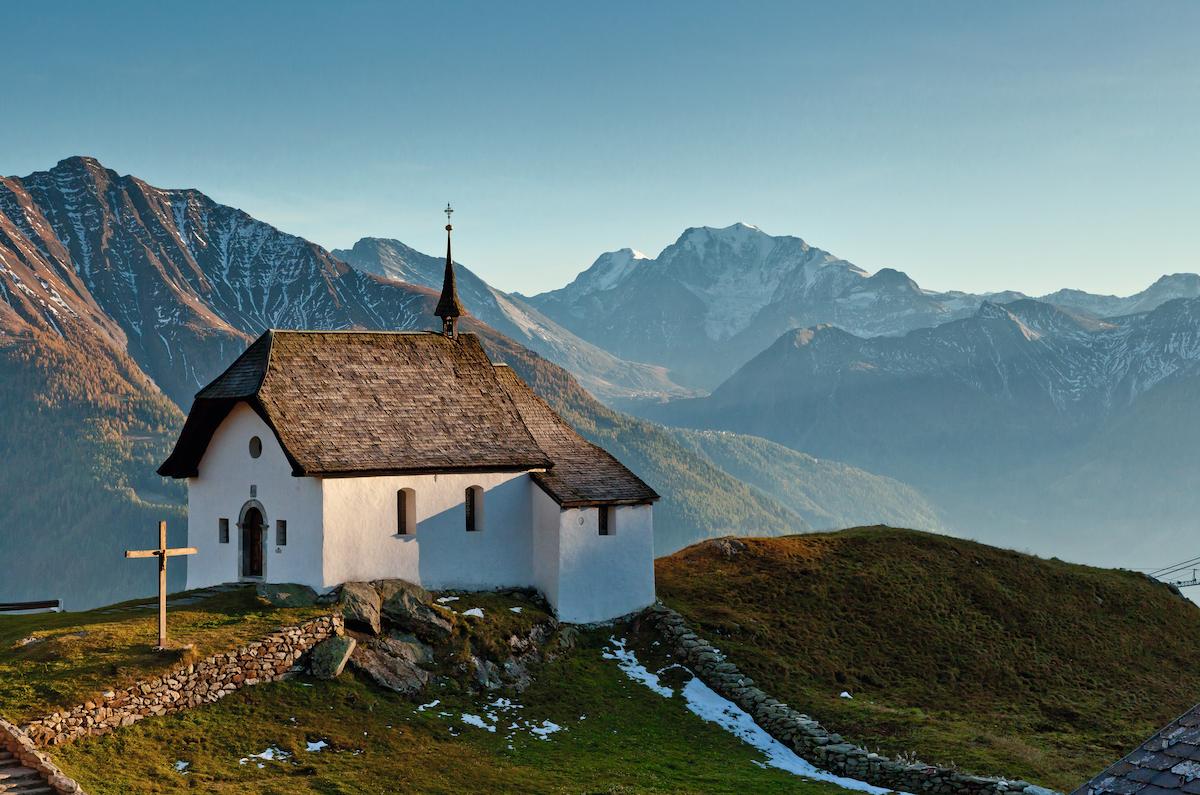
Bettmeralp (Valais)
Perched on a sun-drenched plateau high above the Rhone Valley at 1,957 meters, Bettmeralp is a completely car-free paradise. Because tour buses cannot physically drive up to the village, it retains an unhurried, local atmosphere surrounded by timber chalets and alpine meadows. This village serves as a gateway to the Great Aletsch Glacier, the largest ice stream in the Alps, part of a UNESCO World Heritage site. From the village, a 10-minute gondola ride carries you to the Bettmerhorn ridge at 2,647 meters, revealing panoramic vistas of the 20-kilometer-long glacier curve. Easy, flat family trails wind around the Bettmersee lake, while panoramic paths offer gentle ridge walks high above the ice.
To reach it by train, take the Matterhorn Gotthard Bahn train to Betten Talstation, then board the large aerial cable car directly inside the station; in just 7 minutes you’ll step out into the car-free center of Bettmeralp.
Saas-Fee (Valais)
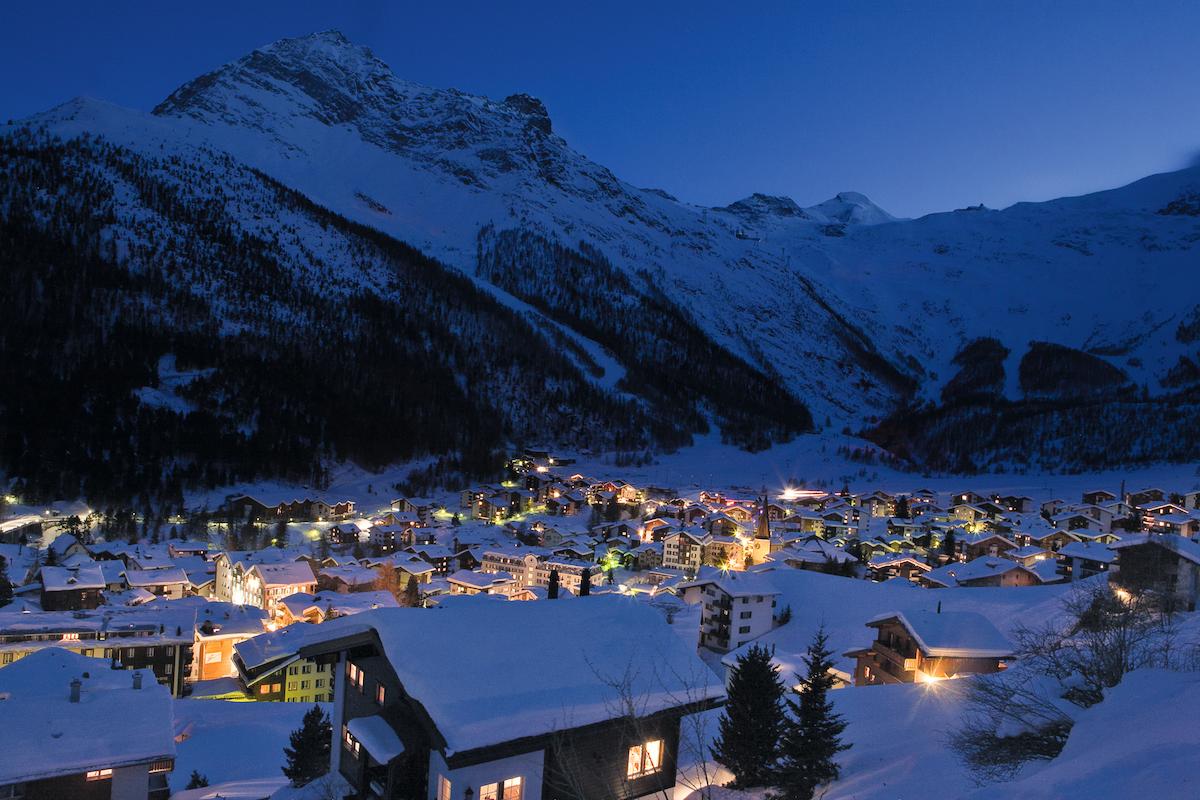
Known as the “Pearl of the Alps,” the car-free village of Saas-Fee sits nestled within the Saas Valley, ringed by 13 peaks exceeding 4,000 meters. It serves as a year-round hub for glacier activities, letting visitors ski the Fee Glacier even in summer or ride the Metro Alpin, the world’s highest underground funicular, up to 3,500 meters. In summer and early autumn, you can also visit Spielboden to hand-feed carrots to friendly, wild alpine marmots.
By train, take the main SBB train line to Visp, then step outside the station to catch PostBus 511 toward Saas-Fee. The electric bus winds through a steep, scenic canyon and drops you directly at the village terminal in about 40 minutes.
Guarda (Graubünden)
Sitting on a sunny terrace in the Lower Engadin Valley at 1,650 meters, Guarda feels like stepping straight into a historic storybook.
Guarda is famous as the setting for the classic Swiss children’s book Schellen-Ursli (A Bell for Ursli). The village is renowned for its impeccably preserved 16th- and 17th-century Engadin houses featuring sgraffito, a traditional artistic technique where intricate geometric patterns and proverbs are etched into wet plaster facades. Narrow cobblestone lanes lead to wooden fountains, far away from commercial tourist crowds.
By train take the Rhaetian Railway (RhB) along the Engadin line to Guarda Staziun down in the valley floor, then cross the platform to catch the connecting yellow PostBus, which climbs the steep winding road to the upper village stop Guarda, cumün in under 10 minutes.
Bergün (Graubünden)
Nestled along the UNESCO-listed Albula Railway line, Bergün is a mountain village where time appears to have stood still.
Bergün sits in the heart of engineering history, adjacent to the famous multi-arched Landwasser Viaduct. The village center is dominated by historic alpine homes and the grand Kurhaus Bergün, an Art Nouveau hotel built in 1906 that has been restored to preserve its original ballroom and historic charm. In winter, the closed mountain pass road between Preda and Bergün becomes Europe’s longest illuminated sledging track.
By train board the red Rhaetian Railway train from Chur toward St. Moritz. The train travels over helical tunnels and high viaducts before dropping you right at Bergün/Bravuogn station. Want help mapping out your trip? Chat with a local Swiss travel expert and start building your custom itinerary today!
Vals (Graubünden)
Positioned at the end of a deep valley in Eastern Switzerland, the secluded village of Vals caters to architectural enthusiasts and wellness connoisseurs seeking tranquil mountain escape. The focal point of Vals is the world-renowned 7132 Thermal Baths, designed by Pritzker Prize–winning architect Peter Zumthor. Constructed from 60,000 slabs of locally quarried quartz, the monolithic spa integrates natural spring water, light, and stone into a serene sensory sanctuary.
To reach it, take the Rhaetian Railway to Ilanz (Switzerland’s first city on the Rhine). Then board PostBus 431 bound for Vals. The bus climbs up the Valser valley, stopping directly at Vals, Therme.
Lavertezzo (Ticino)
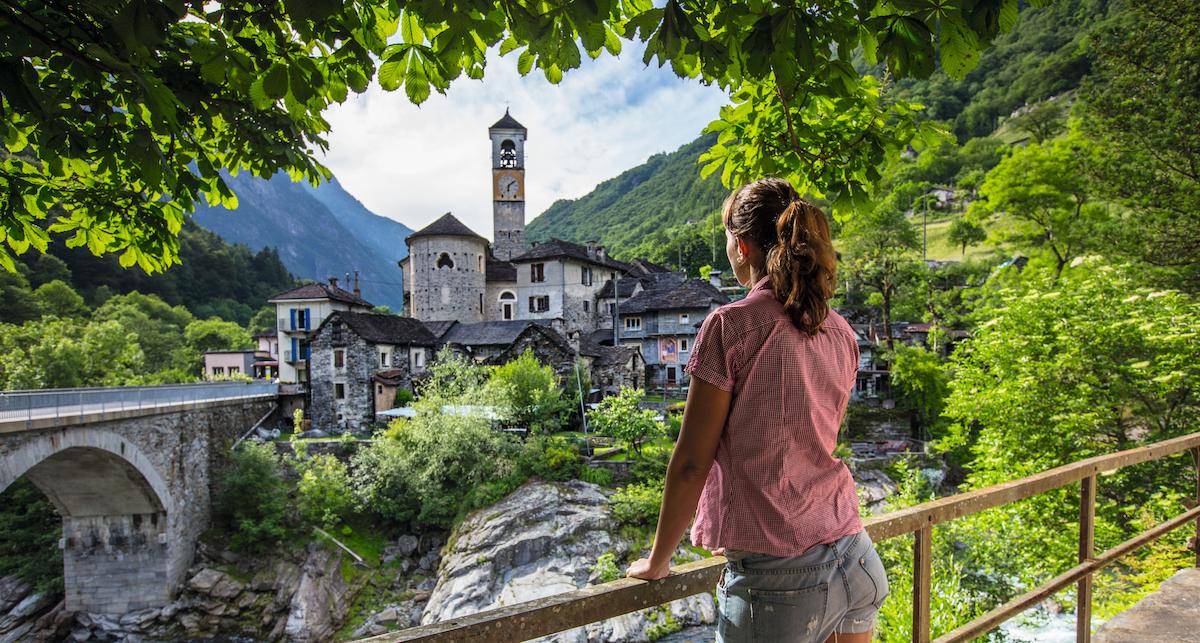
In the Italian-speaking canton of Ticino, the village of Lavertezzo sits tucked inside the narrow, granite-walled Verzasca Valley.
Lavertezzo is famed for the Ponte dei Salti, a 17th-century double-arched stone bridge spanning the crystal-clear, emerald-green waters of the Verzasca River. Nearby, family travelers can hike the BoBosco trail (a wood-marble ball track carved along the forest path), while adrenaline seekers can stop at the Verzasca Dam near the valley entrance to try the famous 220-meter Bungee Jump featured in James Bond’s GoldenEye.
To reach the valley by public transit, take an SBB train to either Locarno or Tenero, then board PostBus 321 right outside the station. Ride up into the valley and hop off at the Lavertezzo, Paese stop for the stone bridge, or Diga Verzasca for the dam.
Saanen (Bernese Oberland)
While high-end shoppers head to neighboring Gstaad, travelers looking for authentic Bernese Oberland charm flock to historical Saanen.
Saanen’s pedestrian center features pristine wooden chalets dating back to the 16th century, adorned with carved inscriptions and flower boxes. Located along the scenic GoldenPass railway route, Saanen provides an ideal base for regional side trips. A 10-minute train ride down the line lands you in Château-d’Oex, home to traditional paper-cutting artisans and local alpine cheese dairies where you can observe traditional Gruyère AOP style cheese-making over an open wood fire.
By train hop on the MOB (Montreux Oberland Bernois) or GoldenPass Express train connecting Interlaken or Montreux directly to Saanen station.
Romainmôtier (Vaud)
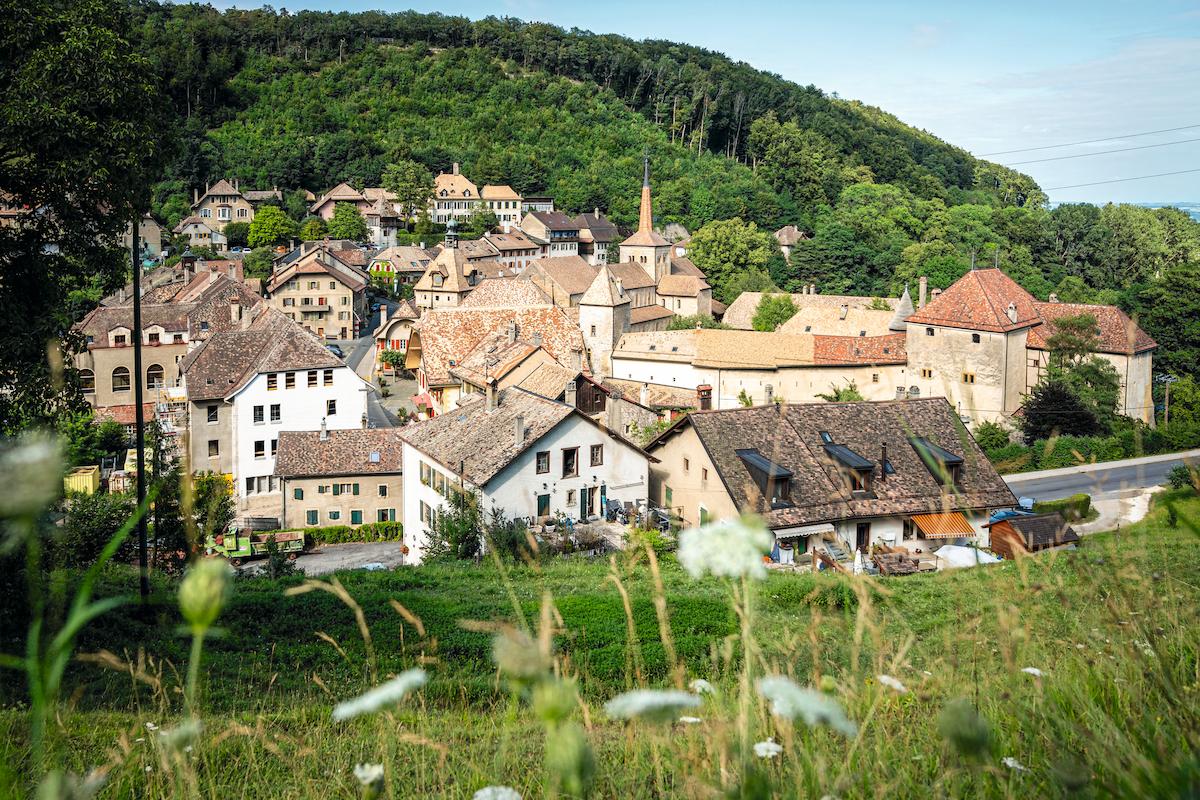
Hidden in a quiet wooded valley at the foot of the Jura mountains in French-speaking Vaud, Romainmôtier is one of Switzerland’s most historic hidden treasures.
The centerpiece of this village is its 11th-century Cluniac abbey church, built on the foundations of Switzerland’s oldest monastery (originally founded in the 5th century). Surrounding the romanic monastery are cobblestone lanes lined with historic stone houses mostly dating from the 18th and 19th centuries, artisan bakeries, and tea rooms serving regional pastries.
By train from Lausanne or Geneva, take the regional train line toward Vallorbe and get off at Croy-Romainmôtier. Then take a quick 5-minute ride on the connecting PostBus 685, or take a peaceful 20-minute downhill walk along the forested stream path directly into the village center.
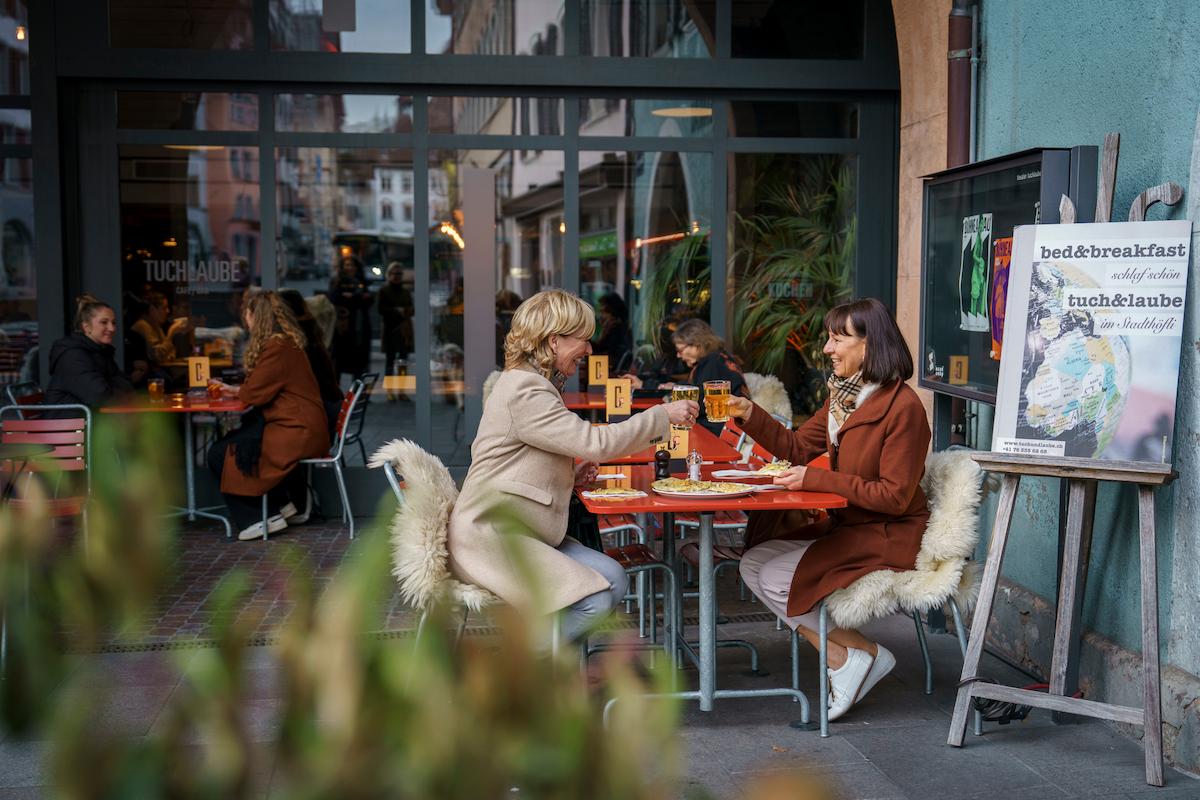
Here are a few essential tips to make your independent traveling better:
Invest in a Rail Pass: The Swiss Travel Pass gives you unlimited access to all the train routes mentioned above, along with the iconic yellow PostBuses. It also includes free travel or heavy discounts on connecting mountain cable cars.
Download the SBB Mobile App: Switzerland’s official transit app is a must-have, offering real-time, door-to-door itineraries, platform numbers, and live transfer updates for every train, bus, and cable car nationwide.
Pack Light or Ship Your Bags: When heading to car-free or multi-transfer destinations like Bettmeralp or Saas-Fee, take advantage of SBB’s station-to-station luggage delivery so you can travel completely hands-free.
Whether you’re enjoying a glass of wine in the Valais village, unwinding in thermal quartz waters, or strolling across historic stone bridges in Ticino, exploring Switzerland independently brings a whole new level of magic to the trip. We’ll help you piece together the scenic rail routes, mountain passes, and authentic stays for a seamless, custom-built journey.